

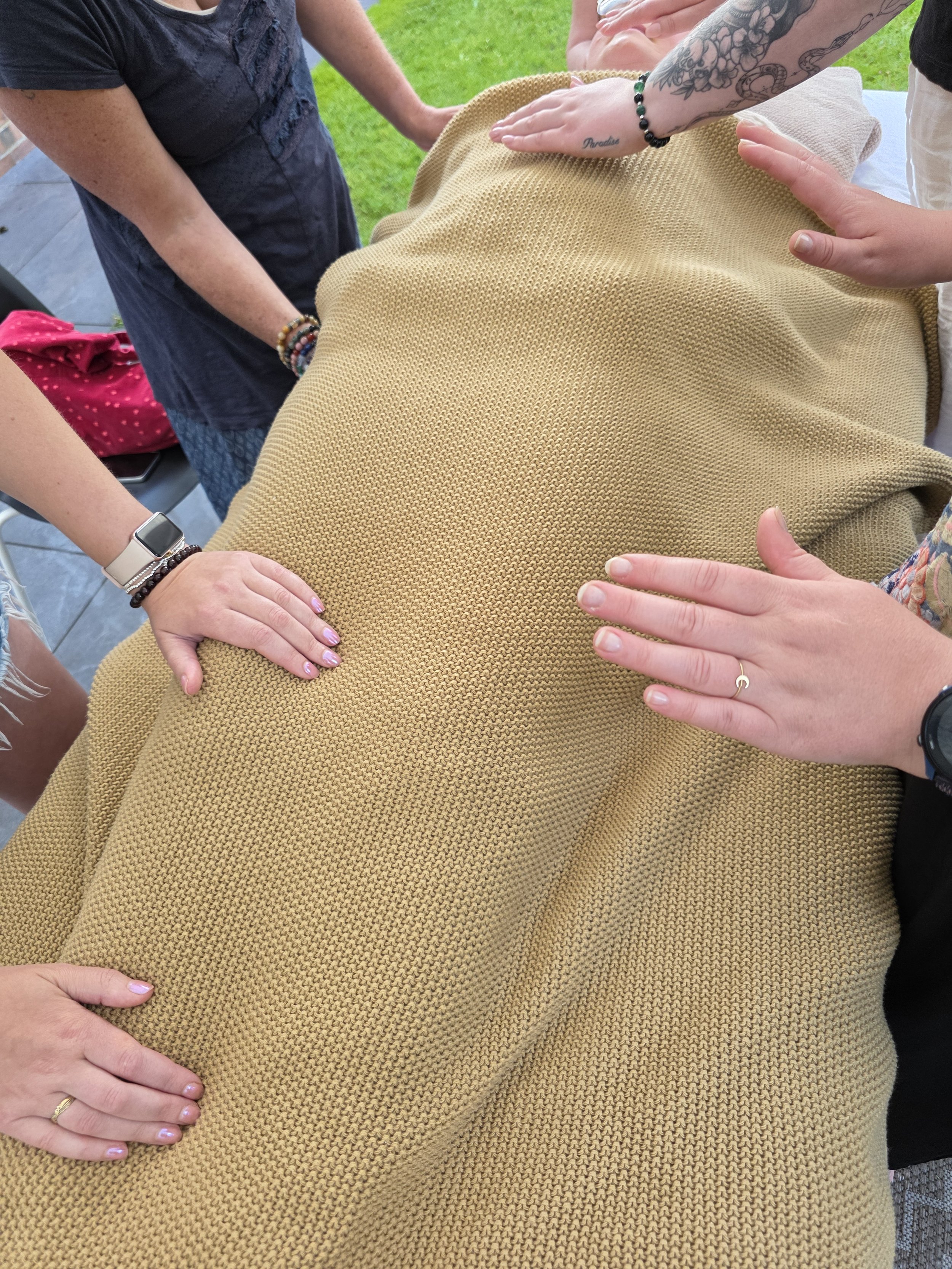
Reiki Training Aftercare
Completing Reiki training is not the end of the course. It is the beginning of a period in which the teachings, practices and Reiju are absorbed through your own experience.
You may leave training feeling energised, deeply rested, emotional, tired, clear-headed or completely ordinary. All of these responses are valid. There is no correct way to feel after Reiki training, and you do not need to search for signs that something has happened.
Reiju does not place a new power inside you or suddenly transform you into a different person. It supports you in recognising and experiencing Reiki more deeply. What follows depends greatly upon your continued practice.
The First 21 Days
For the first 21 days after training, you are encouraged to establish a regular daily Reiki practice. The 21-day period is not a compulsory cleanse, detoxification process or test that you must complete perfectly. You have not failed if you miss a day, and you do not need to begin again from day one.
This period gives you a clear structure while the course is still fresh. It allows you to practise what you have learned, become familiar with your own responses and begin creating a relationship with Reiki that is based on experience rather than information alone. Reiki develops through practice. The more consistently you work with the teachings, the more natural and embodied they become.
Your Daily Practice
Set aside a realistic amount of time each day. It does not need to be long or complicated. Your practice may include:
The Reiki precepts
Gasshō
Joshin Kokyū Hō
Kenyoku Hō
Meditation
Hands-on self-treatment
The practices taught at your level
Sitting with the jumon and shirushi, where these form part of your training
You may complete a full self-treatment when time allows, or place your hands on one or two areas of the body for a shorter period. What matters is that you continue showing up for the practice.
Some days will feel focused and connected. Other days may feel distracted, flat or uneventful. Do not measure the value of your practice by sensations alone. Warmth, tingling, emotion, imagery or deep relaxation may occur, but they are not the purpose of Reiki and they are not proof that you are progressing. A practice that feels ordinary still has value.
Work With the Reiki Precepts
The precepts are not positive affirmations to repeat without thought. They are the foundation of the system and are intended to be practised within ordinary life.
For today:
Do not anger.
Do not worry.
Be grateful.
Be true to your way and your being.
Show compassion to yourself and others.
Spend time with one precept each day or recite them together during Gasshō. Notice where they meet your real life. You may become more aware of frustration, worry, fear, self-criticism or the ways you react under pressure. This does not mean Reiki is making you worse. Practice often helps us see more clearly what was already present. The purpose is not to become perfect or suppress natural emotion. The precepts offer a way of meeting life with greater awareness, honesty and compassion.
Hands-On Self-Treatment
Self-treatment is one of the most important parts of Reiki practice. Place your hands gently on the body and allow them to rest. You do not need to visualise energy, push Reiki, diagnose yourself or decide what must be healed. Your hands are not the source of Reiki, and you do not need to make anything happen. Remain present, breathe naturally and allow the practice to unfold without interference. You may use the hand positions taught during your course or stay longer in an area that feels appropriate. Self-treatment can be completed sitting, lying down or supported in another comfortable position. Adapt the practice to your body rather than forcing yourself into discomfort.
Hara and Breath
Continue to develop your awareness of the Hara through the breathing and meditation practices taught during your training. Rather than trying to move energy through the body, focus on breathing naturally into the lower abdomen and allowing your attention to settle there. The Hara is not another point to overanalyse. It supports steadiness, presence and a less reactive way of meeting your practice and daily life. Over time, this work can help you feel less as though everything is happening in your head and more grounded within the whole body.
Rest and Physical Care
Training can be mentally, emotionally and physically demanding, particularly when it includes long periods of meditation, practice, treatment and new information.
After the course:
Rest when you need to
Eat regularly
Drink according to your normal needs
Spend time outside where possible
Avoid placing unnecessary pressure on yourself
Give yourself time to process what you have learned
You do not need to drink excessive amounts of water, follow a special diet or avoid normal daily life.
There is no required Reiki detox, and you should not assume that headaches, illness, pain or distress are signs of a healing crisis. New, severe or persistent symptoms should be assessed appropriately by a healthcare professional.
Emotional Responses
You may notice emotions more clearly after training, especially if the course gave you time to stop and pay attention to yourself. You may feel peaceful, unsettled, tearful, inspired, tired or thoughtful. You may also notice no emotional change at all. Allow emotions to be present without turning every feeling into a spiritual message. Reiki is not about avoiding difficult emotions or pretending to remain calm at all times. If strong emotions, trauma responses or mental health concerns arise, seek support from an appropriately qualified professional. Reiki can sit alongside psychological and medical care, but it does not replace them.
Avoid Comparing Your Experience
Every student experiences Reiki differently. Some people feel strong sensations during Reiju and practice. Others feel very little. Some immediately establish a daily routine, while others take time to find a rhythm that works. Do not compare your experience with another student’s or assume that stronger sensations mean greater ability. The most meaningful changes in Reiki practice are often gradual and may be seen in how you respond to pressure, how honestly you meet yourself and how consistently you live the precepts.
Practicing Reiki With Others
Only offer Reiki within the boundaries of the level you have completed and the guidance given during your course. Always ask for consent. Do not assume that a family member, friend, child or animal wants Reiki. Respect a person’s right to decline or stop the treatment.
When offering hands-on Reiki:
Explain clearly what you are offering
Ask permission before touching
Avoid intimate areas
Maintain appropriate boundaries
Do not diagnose
Do not promise a result
Do not tell someone to stop medication or medical treatment
Do not interpret sensations as facts about their body or life
Keep personal information confidential
Your role is not to fix, rescue or take responsibility for another person’s healing. Offer Reiki with presence and without forcing an outcome.
Do Not Rush Into the Next Level
Allow time for the teachings to become part of your own experience before moving forward. A certificate shows that you attended training. It does not replace personal practice, maturity or experience. Moving quickly through Reiki levels may provide more techniques and information, but it does not automatically deepen your understanding. Depth comes through working consistently with what you have already been taught. Your readiness for further training should be based on your practice rather than only on the amount of time that has passed.
Keep a Practice Journal
You may find it helpful to keep brief notes throughout the first 21 days.
You could record:
Which practices you completed
How long you practised
How you felt before and afterwards
Any questions that arose
Your experience of the precepts
Changes you notice in daily life
Areas that feel difficult or unclear
There is no need to record every sensation or search for hidden meanings. The journal is there to help you recognise patterns and remain engaged with your practice.
When You Miss a Day
Life happens. You may be unwell, busy, exhausted or simply forget.
Do not turn the 21-day practice into another reason to criticise yourself. Continue the following day.
Consistency matters, but rigidity does not. Reiki practice should support your life rather than become a source of guilt.
Even placing your hands on your Hara for a few minutes, reciting the precepts in Gasshō or taking several steady breaths can help maintain your connection with the practice.
Ongoing Practice After 21 Days
The end of the 21 days is not the end of your Reiki practice. The purpose of this period is to help you establish foundations that can continue in a realistic way. Afterward, decide what daily or weekly rhythm you can genuinely maintain. Reiki is not something that is completed within a weekend. It continues through self-treatment, meditation, the precepts, hands-on practice, Reiju, further learning and the way you meet your everyday life. The teachings deepen because you practise them, not because you collect more certificates.
When to Ask for Support
Please contact me if you are unsure about a practice, cannot remember part of the teaching or need clarification about boundaries, treatment or your next steps. Questions are a normal part of learning. You are not expected to leave the course knowing everything. Continued practice with others can also be valuable. Reiki shares, ongoing teaching and the Reiki Dojo offer opportunities to practise, receive Reiju, revisit the foundations and remain connected to a community of students.
A Suggested 21-Day Structure
Days 1–7: Establishing the Foundations - Focus on showing up each day.
Practise the precepts, Gasshō, breathing into the Hara and hands-on self-treatment. Keep the practice manageable and become familiar with how it feels to make Reiki part of your daily life.
Days 8–14: Deepening Awareness - Continue the same foundations while noticing how the practice affects your responses outside formal practice.
Pay attention to worry, anger, gratitude, honesty and compassion as they arise during ordinary situations. Avoid judging yourself. Use the precepts as a way of seeing more clearly.
Days 15–21: Creating a Sustainable Practice - Consider which elements have supported you most and how you will continue after the 21 days.
Rather than trying to complete everything every day, begin forming a practice that is consistent, realistic and rooted in the teachings you have received.
Continue Your Practice in the Reiki Dojo
Reiki was never intended to be learned over a weekend and then left behind. The first 21 days help you begin, but continued practice is what allows the teachings to deepen and become part of your everyday life. The Reiki Dojo is an ongoing practice and learning community for anyone trained in Usui Reiki, whether you completed your training with Holistic Care Durham or through another Usui Reiki lineage. For £12 per month, membership includes monthly online practice meetings, Reiki shares, further teachings, guided meditations, continued professional development, access to the online training portal and opportunities to attend in-person gatherings where available.
You do not need to live locally to join. The Dojo is both online and in person, so you can remain connected, revisit the foundations, ask questions and continue practising wherever you live. The purpose of the Dojo is not to keep collecting more information. It is to give you somewhere to practise what you have already received, strengthen your understanding and remain part of a supportive Reiki community. Your training may finish, but your practice continues.
Final Guidance
Be patient with yourself. You do not need to force a connection, produce sensations or prove that your Reiki is working. Continue with the practices, work with the precepts and allow understanding to develop through experience. Reiki is not something separate from you that appears only when your hands are placed on a body. The formal practices help you recognise and embody what has always been present. The first 21 days are a beginning.