What Reiki Is
Reiki is a Japanese practice of hands on healing, meditation, presence and self-cultivation, originally developed by Mikao Usui in the early 20th century.
It is often described as a healing treatment, but in its deeper roots, Usui Reiki Ryōhō is much more than something we receive on a couch. It is a practice that helps the mind and body return to a steadier state, allowing the person to feel more settled, more connected and more able to rest.
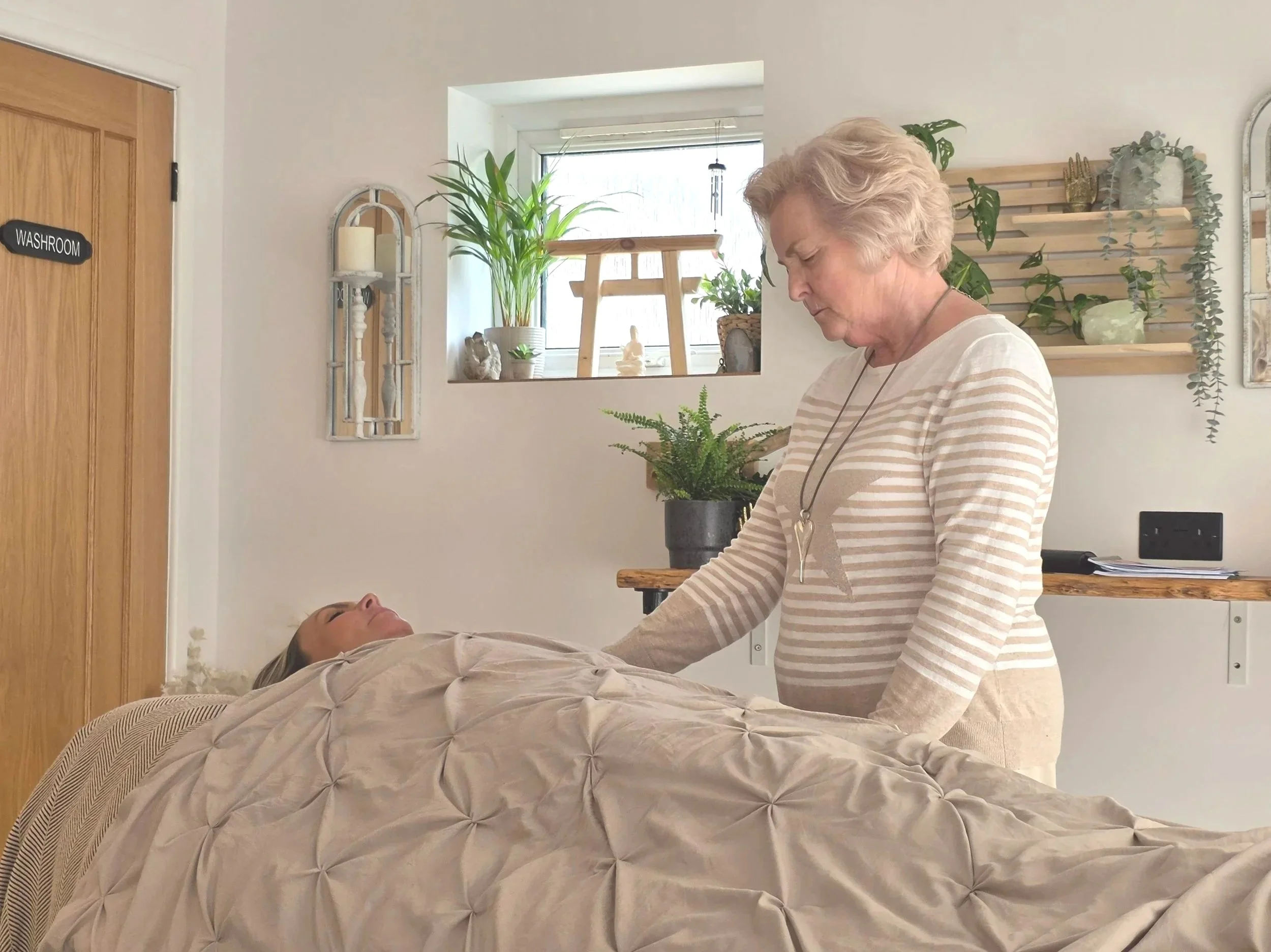
At Holistic Care Durham, Reiki is offered in a calm, professional and supportive setting. You remain fully clothed, lying comfortably on a therapy couch, while hands are placed gently on, or just above, the body. There is no pressure, no manipulation and no need to explain everything you are carrying.
Many people come to Reiki when they feel stressed, anxious, exhausted, emotionally overwhelmed, disconnected from themselves, grieving, sensitive, in pain, or simply in need of deep rest.
Reiki is not a replacement for medical care, diagnosis, counselling or mental health support, but it can sit beautifully alongside other forms of care as a supportive practice for the whole person.
My Approach to Reiki
My approach to Reiki is grounded in Usui Reiki Ryōhō, with respect for its Japanese roots, Mikao Usui, its ethics, its lineage and its original purpose as a practice of self-cultivation.
I do not treat Reiki as a trend, a performance or something vague and mystical for the sake of it. For me, Reiki is a serious and deeply compassionate practice that begins with the practitioner’s own steadiness, presence and sincerity.
As a former NHS nurse, Integrative Therapist, Usui Reiki Master Teacher and full member of the UK Reiki Federation, I bring both professional experience and deep respect for the tradition into every Reiki treatment and training.
A Reiki session is not about forcing the body to relax or making dramatic claims about healing. It is about creating the conditions where your system may begin to settle, soften and return to itself in its own time.
Some people feel warmth, heaviness, tingling, emotional release or deep relaxation. Others simply feel calm, peaceful or sleepy. Every person responds differently, and there is no right or wrong way to receive Reiki.
Reiki as a Practice of Returning
In its original form, Reiki is not only about treating symptoms or fixing the body. It is a way of returning to yourself.
The word Reiki is often translated simply, but its meaning is deeper than English can fully hold.
Rei points towards the universal, the sacred, the unseen intelligence of life, and that which is not separate from us.
Ki refers to life, movement, vitality, breath and the functioning of the body as it lives, adapts and responds.
Together, Reiki can be understood as a practice that helps us return to right relationship with life, the body, the mind and the deeper self. This is why I teach and practise Reiki with such care. Before Reiki is something we offer to others, it is something we return to within ourselves.
What Reiki May Support
People come to Reiki for many different reasons, including stress, anxiety, burnout, grief, emotional overwhelm, poor sleep, pain, sensitivity, fatigue, illness support, life transitions, or simply the need to feel held in a safe and calm space.
Reiki does not promise to cure or replace medical treatment, but many people find it deeply supportive for rest, emotional steadiness, nervous-system settling and reconnection with the body. For some, Reiki feels like the first time in a long while that they have been able to stop, breathe naturally, and feel safe enough to relax.
Reiki Treatments and Reiki Training
At Holistic Care Durham, Reiki is offered both as a treatment and as professional Reiki training.
You can receive Reiki as a private treatment in the clinic, or learn Reiki through structured Usui Reiki Ryōhō training from Shoden Reiki I through to Okuden, Shinpiden and Shihan Teacher Mentorship. Whether you come to receive, to begin learning, or to deepen your practice, Reiki is held here with warmth, professionalism, ethics and real respect for the tradition.