

What Reiki Is
Reiki is often introduced as a method of healing, something that can be learned, applied and used to help others. This is not untrue, but it is incomplete and when we stop there, we reduce something profound into something functional.
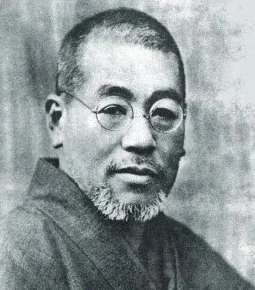
Mikao Usui did not set out to create a technique.
What he established was a method of practice, a way of training the mind and body so that a person could come to recognise directly what had always been present, but not clearly seen. Usui Reiki Ryoho, in its original form, is not centred around fixing the body or treating symptoms. It is centred around returning the practitioner to a state of clarity in which the body naturally begins to reorganise itself.
The word Reiki itself is often translated in simple terms, but its meaning is not something that can be fully captured through translation alone.
Rei points toward that which is universal, not separate, not outside of us, but the underlying nature of all phenomena.
Ki refers to life, to movement, to the functioning of the body as it breathes, adapts, and responds. When brought together, Reiki is not describing something we access or acquire. It is describing the condition of being when the division between self and life begins to ease.
For this reason, Reiki cannot be understood as something we give to another person. There is no transfer taking place in the way it is often described. What we call treatment is, in reality, the creation of conditions in which another person’s system is no longer being interfered with, either by themselves or by us.
In that absence of interference, something far more intelligent than technique begins to operate.
Usui was clear in his teaching that the mind must be addressed first. Not as an abstract idea, but as a direct and practical instruction. The way we think, the way we react, the way we hold onto tension internally without realising it, all of this shapes the condition of the body. To attempt to work with the body without addressing the mind is to remain at the surface of the practice.
This is why the foundational practices are so simple.
Gassho, the placing of the hands together, is not symbolic. It is a method of training attention. The act of returning the mind, again and again, to a single point, reveals very quickly the instability of our attention and the habits of distraction we carry. There is no judgement required here, only observation and return.
Similarly, the breath is not used as a tool to control the body, but as a way of recognising the relationship between mind and physiology. When attention steadies, the breath changes. When the breath changes, the body follows. This is not something we impose; it is something we allow.
When hands are placed on the body, the same principle applies. Nothing is added and nothing is directed. The practitioner is not attempting to change what is being felt, but to remain present enough that the other person’s system begins to settle in response to that steadiness.
In many cases, what is felt first is a releasing of tension that has been held for so long it is no longer consciously noticed. The body does not need to be instructed how to release. It needs the conditions in which it is safe to do so.
This is where the role of the practitioner becomes very clear.
It is not to heal and it is not to fix. It is to remain present without interference. This sounds simple, but in practice it requires a level of honesty and discipline that cannot be bypassed. Any restlessness, expectation, or subtle effort within the practitioner is felt within the interaction. The work then becomes one of refinement, not of technique, but of the practitioner themselves.
The Reiki precepts point directly to this.
They are often treated as moral guidance, but they are far more precise than that. They describe the condition of a mind that is no longer constantly pulled into reaction. Anger and worry are not being suppressed; they are no longer being fed. Gratitude and kindness are not being cultivated as ideals; they arise naturally when the mind is not occupied with resistance.
Over time, the practice becomes quieter. In the beginning, there may be noticeable sensations in the hands, warmth, movement, or changes in the body. These can be helpful in building confidence, but they are not the aim of the practice. As understanding deepens, the focus shifts away from what is being felt and toward the quality of awareness itself.
This is where Reiki returns to its essence.
Not as something we perform, but as something we recognise. The more we interfere, the more we obscure it. The less we interfere, the more obvious it becomes.
In this way, Reiki is not something that is learned once and completed. It is something that is returned to, repeatedly, over time. Each return reveals something slightly different, not because Reiki is changing, but because our capacity to perceive it is becoming clearer.
From that clarity, what we call healing is no longer something we try to achieve. It is something that occurs naturally, as the body and mind come back into alignment with what they have always known.